


20 May Intelligent Eyewear vs. Reality: Testing Google’s AI Glasses and the Future of Smart Frames
You have seen the glossy promotional videos for the latest wave of intelligent eyewear. A traveler glides through a bustling Tokyo street while real-time translation floats flawlessly across their field of view. A professional walks into a high-stakes meeting while a subtle, invisible teleprompter feeds them key statistics. A voice assistant whispers contextual, perfectly accurate answers into their ear before they even finish asking a question. It looks seamless, fashionable, and undeniably like the future. With the recent announcements surrounding Google’s AI glasses, that sci-fi vision feels closer than ever.
But when you unbox a pair, spend hundreds of dollars, and slip them onto your face, reality hits hard. The frames press heavily against your nose bridge, leaving deep red marks after just forty-five minutes. You ask the conversational AI a contextual question about a building in front of you, and it gets stuck in a loop — repeating robotic non-answers or failing to parse your speech over standard city traffic. You glance slightly to the side to read a text message notification, and the entire corner of the display vanishes into a blurry vignette because the frames shifted half a millimeter out of perfect eye alignment. Clearly, modern intelligent eyewear still battles significant engineering hurdles.
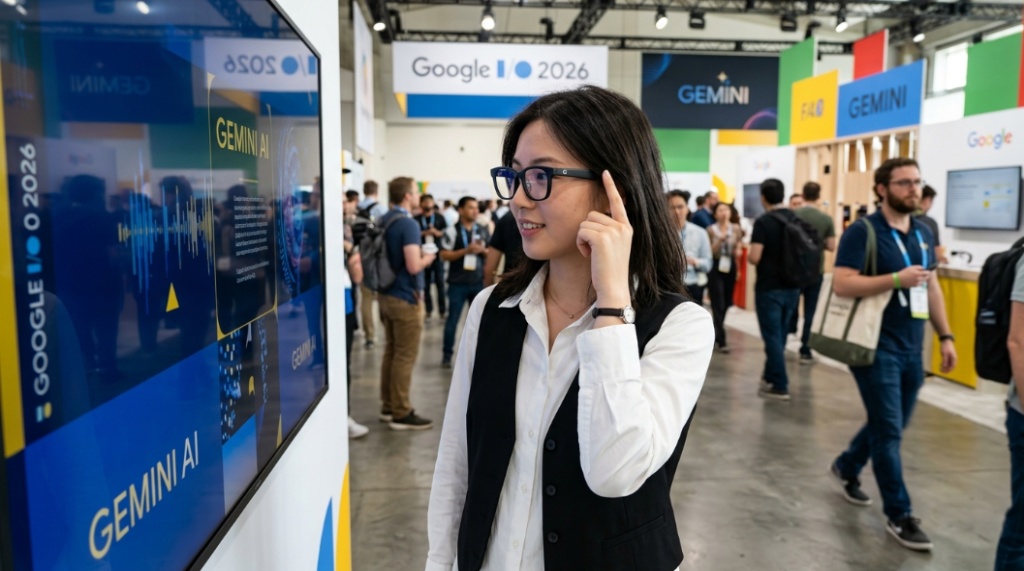
The truth is, most smart glasses on the market feel less like an essential smartphone replacement and more like an expensive beta test. However, the landscape is shifting rapidly. At Google I/O 2026, the tech giant officially threw its weight back into the ring, positioning Google’s AI glasses as a major hardware push built around Gemini, Android XR, and high-profile design partnerships with fashion mainstays like Gentle Monster and Warby Parker. This isn’t just a hardware race — it is an ecosystem war to control what tech analysts call the ambient computing interface.
To cut through the corporate marketing fluff, we spent over thirty days subjecting the leading intelligent eyewear options to real-world conditions. We tested them during noisy urban commutes, under harsh outdoor sunlight, through extended six-hour productivity sessions, and during multi-language translation drills. In this head-to-head evaluation, we also look closely at how the early developer versions of Google’s AI glasses stack up against existing market solutions. Here is the unfiltered, experience-driven truth about what works, what fails, and what is actually worth your money.
The 2026 Intelligent Eyewear Leaderboard
If you are looking for a quick, direct answer on where the market stands right now, here is our bottom-line assessment based on active daily testing of the top intelligent eyewear options:
- Best Overall Daily Driver — Meta Ray-Ban Gen 2. It remains the fastest, most socially acceptable, and most responsive audio-centric intelligent eyewear on the market. It features a completely screenless architecture, meaning there is no heads-up display.
- Best Discreet Text Display — Even Realities G2. Using an ultra-minimalist green micro-LED waveguide system, this device functions beautifully as a hidden teleprompter or navigation prompt screen — and without a front-facing camera. The trade-off? The display easily washes out in direct midday sun.
- The Ecosystem Disruptor — Google’s AI Glasses (Android XR Prototype Platform). While consumer units are still moving through production lines via manufacturing partners, the software architecture underpinning Google’s AI glasses makes it the most software-mature ecosystem previewed this year, thanks to deep system-level integration with Google Maps, Calendar, and YouTube.
Head-to-Head Comparison
To see how the dominant approaches to intelligent eyewear stack up mechanically and financially, review our core specification baseline below:
| Model & Platform | Display Technology | Weight (Grams) | Onboard Camera | Real-World Battery Life | Primary Limitation |
|---|---|---|---|---|---|
| Meta Ray-Ban Gen 2 | None (Audio Only) | 49g – 51g | 12 MP | 3.5 – 4 Hours (Mixed Use) | No visual overlay or HUD text |
| Even Realities G2 | Monochromatic Waveguide | 38g – 41g | None (Privacy Focused) | 5 Hours (Intermittent HUD) | Display washes out in bright sunlight |
| Rokid Glasses | Binocular Micro-OLED | 75g | Yes (Object Tracking) | 2 Hours (Heavy AI Use) | Front-heavy; noticeable nose pressure |
| Google’s AI Glasses (Ref.) | Color Waveguide / HUD | 55g – 62g (Target) | Yes (Contextual Gemini) | Targeting 4+ Hours Active | Delayed consumer retail availability |
While the green micro-LED text is incredibly crisp indoors, it faces significant hurdles out in the real world. If you want a complete breakdown of how the waveguide behaves under direct sunlight, app connection drops, and frame weight, read our dedicated Even Realities smart glasses problems review before making a final buying decision.
Ergonomics and Comfort: The Real-World Weight Threshold
Tech companies love to show models smiling effortlessly while wearing a sleek pair of intelligent eyewear. What they don’t show you is the blunt physics of weight distribution. Standard acetate prescription glasses weigh between 25 and 32 grams. Once a manufacturer packs lithium-ion batteries, copper heat spreaders, micro-LED projectors, and camera sensors into a frame, that weight jumps significantly. Keeping the device ergonomic is a massive challenge that Google’s AI glasses are trying to solve via lightweight composite materials.
Our testing revealed a strict ergonomic threshold: any intelligent eyewear option over 50 grams begins to punish your face after ninety minutes of continuous wear. The Rokid Glasses, weighing in at roughly 75 grams, act as a textbook example of front-heavy design. Because the computing elements and display prisms sit directly over the lenses, the frame exerts relentless downward leverage onto the nasal bone. No matter how many bundled silicone nose pads you swap in, you will find yourself constantly sliding the glasses up your nose bridge to relieve localized soreness.
Community feedback across Reddit also highlights a different ergonomic problem: asymmetrical temple weight. To keep the front profile thin and socially acceptable, engineers hide elongated battery strips inside the plastic arm tips behind your ears. If the arms are not custom-molded or lack flexibility, they drag the back of the frame down, pinning the tips against the upper cartilage of your ears.
Early design documentation for Google’s AI glasses shows an attempt to address this by splitting the motherboard component and battery cells evenly between the left and right temples. Even so, by hour three, a distinct dull ache tends to develop behind the ear tips with poorly balanced frames — forcing you to remove the glasses entirely just to give your skin a break.
Optical Performance: The Flaws Behind the Display Lenses
If you are buying intelligent eyewear with an optical display, you need to prepare for the optical alignment problem. Unlike a smartphone screen or a bulky VR headset, waveguide displays built into fashionable eyeglasses have an incredibly narrow “eyebox” — the tiny zone where your pupil must sit to see projected digital elements clearly. The display-equipped versions of Google’s AI glasses, currently codenamed Project Aura, are reportedly attempting to broaden this field of view to 70 degrees.
The Eyebox Frustration
During active real-world use, the narrow eyebox creates immediate frustration. If you smile, jog, or turn your head sharply to check traffic, the frames shift slightly. The moment they move, the edges or corners of your text display disappear completely. You find yourself constantly reaching up with an index finger to nudge, adjust, and re-center the frames just to read an incoming text message or check a navigation arrow. It turns a hands-free device into a hands-frequent chore — a complaint frequently levied against current premium intelligent eyewear.
The Sunlight Problem
Ambient lighting conditions remain the natural enemy of micro-projectors. While monochromatic green heads-up text looks incredibly crisp inside a dimly lit office or an airport terminal, it faces severe degradation outdoors. Step onto a sun-bleached sidewalk on a bright afternoon, and the light intensity completely overpowers the waveguide patch — turning text into an illegible, translucent blur.
To solve this, Google’s AI glasses are reportedly experimenting with photochromic lenses that automatically darken in sunlight to preserve screen contrast. Without this feature, you are forced to squint or hold your hand over the side of your face to cast an artificial shadow — a workaround that entirely defeats the seamless, discreet ethos of wearable tech.
Software Ecosystem Maturity and App Friction
Hardware is only half the battle. The current state of the intelligent eyewear software ecosystem is plagued by spotty connectivity and half-baked applications. Most independent smart glasses do not run self-contained cellular software — they act as Bluetooth accessories tethered to a companion app running in the background of your smartphone. This is precisely why the platform architecture of Google’s AI glasses focuses heavily on the Android XR engine to establish a permanent, low-latency background link.
This dependency introduces a massive point of failure for existing hardware. If your smartphone’s operating system aggressively kills background processes to preserve battery life, the companion app drops its connection. You will press the touchpad on your glasses to summon your assistant, only to hear a chime followed by a flat, pre-recorded error message: “Please open the app on your phone to reconnect.” Pulling your phone out of your pocket to fix a connection error utterly shatters the core premise of standalone intelligent eyewear.
Worse still is the lack of intuitive interface design. Several premium display glasses allow you to view incoming text notifications in your field of vision, yet completely lack native voice-reply support. You can read a message floating in the air, but you cannot speak your response back into the frame’s microphones. To answer, you still have to dig your phone out of your bag.
This asymmetry makes the glasses feel less like a tool of empowerment and more like an auxiliary monitor strapped to your face. Based on recent keynotes, Google’s AI glasses are addressing this directly — allowing Gemini to handle complete multi-step voice workflows natively, without requiring phone interactions.
AI Assistant Performance: Intelligence vs. Robotic Loops
The core marketing pillar for intelligent eyewear in 2026 is contextual AI — the ability for your glasses to see what you see and hear what you hear. Out on the streets, however, the performance gap between marketing promises and actual software execution is vast. Google’s AI glasses attempt to bridge this via their Project Astra model, running Gemini Omni to process text, audio, and video inputs simultaneously.
The Speech Comprehension Problem
In a quiet room, conversational AI models accurately parse complex voice commands. But sound dynamics change entirely when you step into a busy coffee shop with an espresso machine grinding in the background, or stand on a windy subway platform. Under these conditions, the onboard directional microphones often fail to isolate your voice from ambient noise. The intelligent eyewear routinely mishears critical commands, forcing you to speak loudly and repetitively — making you look intensely awkward to nearby bystanders.
The Latency Problem
When the connection does go through, current cloud processing speeds leave much to be desired. Many systems require a jarring “pause, capture, and wait” workflow. To identify an unfamiliar object or translate a sign, you must hold your head completely still, activate the camera, wait for a shutter chime, and then pause for three to five seconds while data uploads to a remote server for processing. This latency kills spontaneous discovery. If you are walking at a normal brisk pace, by the time the AI voice returns with an answer, you have already moved half a block past the object you asked about.
The real test for Google’s AI glasses will be whether their localized, on-device Nano AI models can process environmental images instantly — without relying on slow cloud handshakes.
The Loop Problem
When the AI encounters an edge case or experiences data packet loss, it reverts to unhelpful, robotic loops. Instead of acknowledging a localized search failure, assistants frequently spit back repetitive phrases like: “I’m sorry, I encountered an unknown error. Please try your request again later.” Hearing that monotone sequence three times in a row while trying to navigate an unfamiliar neighborhood is enough to make anyone put their intelligent eyewear back in its charging case.
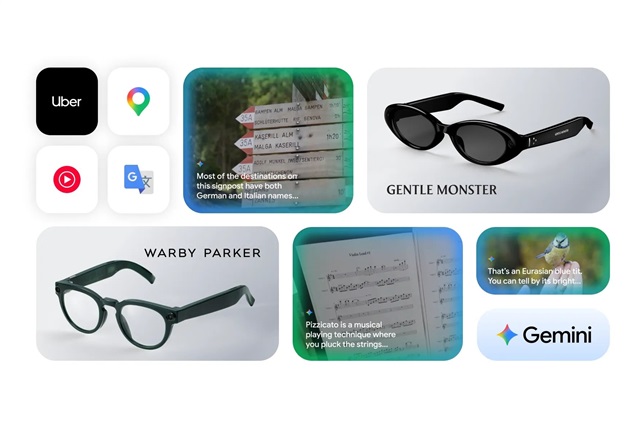 Image: Google
How Google’s AI Glasses Aim to Change the Game
This deep frustration with fragmented hardware and broken app loops explains why the newly revealed strategy for Google’s AI glasses is so significant. Google is explicitly avoiding the isolated gadget trap by treating its upcoming glasses as an extension of an integrated operating system: Android XR.
Instead of forcing users to rely on buggy, proprietary third-party apps, the Gemini intelligence layer feeds directly into a massive, pre-existing software ecosystem. When you wear an Android XR-powered frame, the AI doesn’t just run blind web searches — it connects natively to your personal data infrastructure:
Contextual Navigation
Google Maps feeds real-time, precise direction overlays directly onto the display lenses of Google’s AI glasses, utilizing live traffic data rather than delayed phone screen mirrors.
Cross-App Automation
You can glance at a physical flyer for a concert, tell the glasses to check your availability, and Gemini will automatically cross-reference your Google Calendar, find an open slot, and use Universal Cart to queue up ticket purchases — completely hands-free.
Hardware Fashion Partnerships
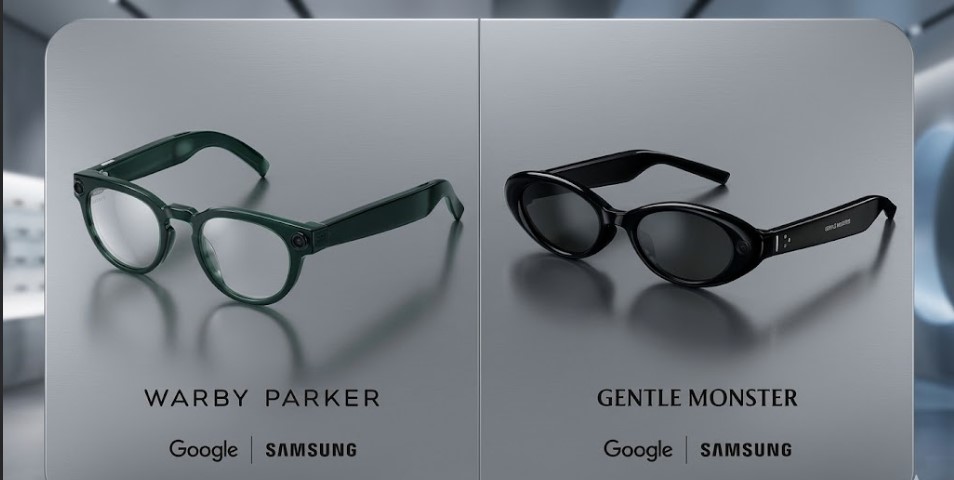
By outsourcing frame styling to premium eyewear brands like Warby Parker and Gentle Monster, the team behind Google’s AI glasses is focusing purely on the software stack while ensuring the final consumer units look indistinguishable from classic, fashionable luxury eyewear.
Meta currently enjoys a significant first-mover advantage, having sold millions of audio-centric smart frames and refined their wrist-based control mechanics over several iterative cycles. However, the ultimate weapon for Google’s AI glasses lies in cross-app maturity. Meta can provide a great camera and a snappy assistant, but it cannot seamlessly pull a flight itinerary out of your Gmail or update a collaborative workspace document in real time. The impending battle between Meta’s hardware head start and Google’s Android XR ecosystem will define the next five years of wearable computing.
The Privacy and Social Dilemma
We cannot discuss the evolution of intelligent eyewear without addressing the social friction of the front-facing camera. Walking into a public space, a gym locker room, or a private dinner party while wearing glasses equipped with an integrated camera immediately changes the social dynamic. No matter how many times you assure people that you are not recording them, the lingering suspicion remains. This is a PR hurdle that Google’s AI glasses must navigate carefully to avoid repeating the social backlash of the original Google Glass era.
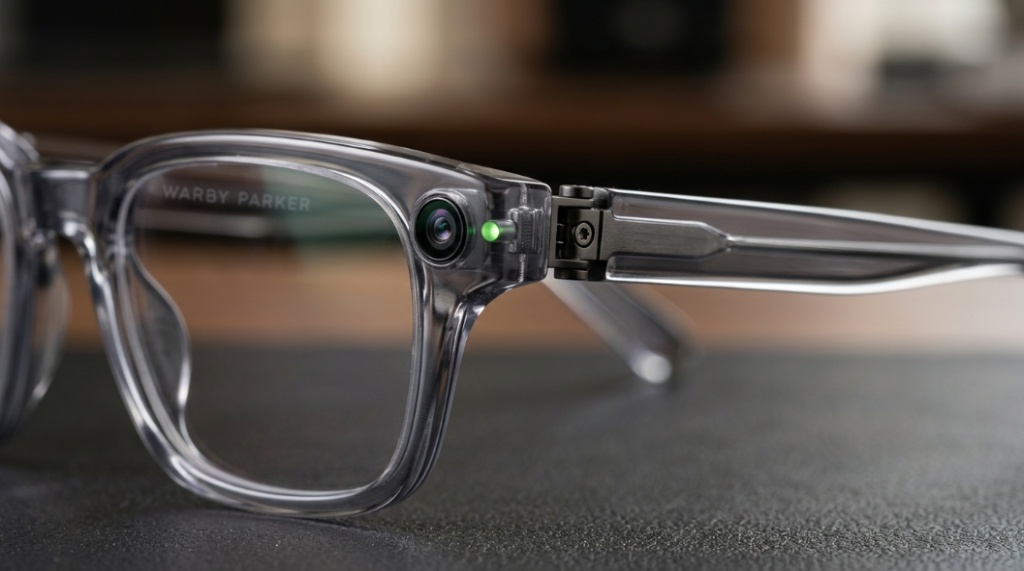
Manufacturers have attempted to mitigate this by installing bright, physical privacy LEDs that illuminate whenever the camera sensor draws power. However, tech-savvy users have already noted how easily these indicators can be obscured with a small piece of electrical tape or black nail polish — keeping public anxiety high.
Conversely, completely camera-free intelligent eyewear models like the Even Realities G2 sidestep this social paranoia entirely. By relying purely on open-ear audio microphones and an inbound text display, they offer zero privacy threat to bystanders, making them infinitely easier to wear in professional corporate environments without raised eyebrows. For users who prioritize discretion, this design philosophy presents a compelling alternative to the camera-heavy configurations of Google’s AI glasses.
The Value Proposition: Are They Worth the Money?
With retail price points for functional intelligent eyewear starting at $300 and climbing well past $600 once you factor in custom prescription lens formatting, these devices represent a substantial financial investment. While official retail pricing for the finalized consumer editions of Google’s AI glasses has not been confirmed, internal leaks suggest they will scale across a similar premium pricing tier depending on display configuration.
The truth is, most smart glasses on the market feel less like an essential smartphone replacement and more like an expensive beta test. However, the landscape is shifting rapidly.
At Google I/O 2026,
the tech giant officially threw its weight back into the ring, unveiling a major push built around Gemini, Android XR, and high-profile design partnerships with fashion mainstays like Gentle Monster and Warby Parker. According to the official Google Blog announcement, this isn’t just a hardware race; it is an ecosystem war to control what tech analysts call the “ambient computing interface.”
If you are an early tech adopter, a frequent international traveler who relies on heads-up translation text, or a public speaker who can leverage an invisible eye-level teleprompter, the utility justification for intelligent eyewear is absolutely there. The technology, even with its current flaws, delivers an experience that a traditional smartphone cannot replicate.
Frequently Asked Questions
What is intelligent eyewear?
Intelligent eyewear refers to normal spectacles with built-in micro-computing hardware. These glasses feature open-ear acoustic speakers, directional microphones, and front-facing cameras. Some models also include transparent waveguide displays.
Are AI smart glasses comfortable for all-day wear?
Currently, comfort varies widely by weight. Glasses weighing under 45 grams can be comfortably worn for several hours. Frames that exceed 50 to 75 grams often introduce nose bridge pressure and ear cartilage fatigue during extended use,
Why does text on smart glasses look blurry at the corners?
This blurriness is caused by a restrictive optical alignment zone known as the eyebox. Waveguide projection displays require your pupil to align precisely with the internal light path.
Can you wear intelligent eyewear in bright daylight?
However, models with transparent heads-up displays often suffer from outdoor washout. Strong ambient sunlight easily overpowers the micro-projector. This turns the overlaid text completely unreadable unless you stand in the shade.
Do smart glasses leak sound to people standing near you?
Yes. Most intelligent eyewear relies on open-ear acoustic speakers located on the frame temples rather than bone conduction or isolating earbuds. In quiet environments, people standing within a few feet of you can often hear what is playing through the speakers.
Conclusion
Google’s return to the smart glasses arena is more than a simple product launch. It is a clear statement that the ambient computing era is finally here. The company learned a hard lesson from the failure of the original Google Glass. Now, leadership states its strategy plainly: fashion must come before technology. That is why this generation of Google’s AI glasses relies on a major partnership with Samsung, Gentle Monster, and Warby Parker. These brands bring genuine cultural credibility to style-conscious consumers globally.
The engineering challenges outlined in this review — weight, optical alignment, battery life, AI latency, and software fragmentation — are real. None of them is insurmountable, and the pace of improvement over the past two years has been remarkable.
We are not yet at the finish line. But for the first time in the history of wearable computing, it is genuinely visible from here.
