



19 May The $700 Smart Glasses Illusion: Meta Ray-Ban vs Even Realities G1 Comparison
You imagine seamless AI assistance, floating notifications, instant translations, voice commands, music playback, and wearable technology that naturally blends into daily life.
But after the marketing hype fades, many buyers discover a very different reality.
The battle between Meta Ray-Ban smart glasses and the Even Realities G1 highlights one of the biggest problems in modern wearable technology: futuristic features often come at the cost of reliability.
One pair focuses on practical usability and polished AI integration. The other prioritizes a futuristic heads-up display (HUD) experience but struggles with software instability, comfort issues, and missing features.
This long-term Meta Ray-Ban vs Even Realities G1 comparison explores what actually happens after weeks and months of real-world use — not just flashy first impressions.
Quick Summary: Which Smart Glasses Are Better?
| Category | Meta Ray-Ban Gen 2 | Even Realities G1 |
|---|---|---|
| Audio Quality | Excellent open-ear speakers | No built-in speakers |
| AI Assistant | Fast and conversational | Robotic and repetitive |
| Comfort | Comfortable for long wear | Reports of nose and ear pain |
| Display | No HUD display | HUD with a tiny sweet spot |
| Voice Messaging | Supported | Not supported properly |
| Software Stability | Reliable and polished | Frequent crashes reported |
| Best Use Case | Everyday smart wearable | Teleprompter and translation |
Short Answer: If you want reliable smart glasses with polished AI, seamless messaging, and excellent audio, the Meta Ray-Bans are currently the better choice for most people.
The Even Realities G1 offers a futuristic HUD experience, but many users report severe software frustrations, display alignment issues, and missing features that make the $700–$800 price tag difficult to justify.
The Hype vs. Reality: Why Most Smart Glasses Reviews Are Misleading
Most online smart glasses reviews only test products for 24–48 hours.
That short testing period is enough for:
- Unboxing impressions
- Camera tests
- Translation demos
- Stylish cinematic footage
- Surface-level AI interactions
There is not enough time to discover the real issues that appear during long-term ownership.
Daily wear exposes:
- Software bugs
- Battery frustrations
- Comfort problems
- Notification inconsistencies
- AI limitations
- Display alignment flaws
- App ecosystem weaknesses
This is where the gap between Meta Ray-Ban Gen 2 and Even Realities G1 becomes extremely noticeable.
Meta Ray-Ban Philosophy: Audio + AI First
Meta took a practical approach with the Ray-Ban smart glasses.
Instead of forcing augmented reality displays into the lenses, Meta focused on:
- Open-ear audio quality
- Voice assistant functionality
- Hands-free messaging
- Phone integration
- Wearable AI assistance
- Comfortable daily usability
The result feels less futuristic visually but dramatically more polished in everyday use.
Many users report forgetting they are even wearing “smart glasses,” which is a major advantage in wearable technology.
Even Realities G1 Philosophy: HUD Display + AI
The Even Realities G1 takes the opposite approach.
The product is heavily centered around its heads-up display technology.
The idea is compelling:
- Floating text notifications
- Real-time translations
- Teleprompter functionality
- AI responses inside your lens
Initially, the HUD feels futuristic and exciting.
However, long-term use reveals several major compromises that many buyers did not expect.
The Biggest Hardware Problem: Display Sweet Spot Issues

One of the most common smart glasses display problems with the Even Realities G1 involves the extremely small visible display area.
Why the Display Feels Frustrating
The G1 uses waveguide display technology.
In theory, this allows digital text to appear directly inside your field of vision.
In reality, the active display area is surprisingly tiny.
Users frequently report:
- Cut off text corners
- Dimmed display edges
- Words disappearing during movement
- Constant frame readjustment
- Difficulty maintaining proper alignment
If the glasses slide even slightly down your nose, portions of the HUD can become unreadable.
This creates a frustrating experience because users constantly need to reposition the glasses to maintain visibility.
If the glasses slide even slightly down your nose, portions of the HUD can become unreadable. This creates a frustrating experience because users constantly need to reposition the glasses to maintain visibility. Several other real-world usability complaints have also been reported by long-term users, which we covered in our detailed Even Realities smart glasses review and problem breakdown.
Why Field-of-View Matters in Smart Glasses
Field-of-view limitations are one of the biggest challenges in wearable AR technology.
Marketing videos often make HUD systems appear immersive and seamless.
But real-world use includes:
- Walking
- Head movement
- Sweating
- Posture changes
- Frame shifting
Those small movements dramatically affect the G1 display experience.
For a product costing over $700, many users expect a more refined implementation.
Comfort Problems: Nose Pain and Ear Fatigue
Another major complaint in Even Realities G1 honest reviews involves comfort.
While the glasses look sleek and minimal, extended wear reportedly causes:
- Nose bridge pressure
- Visible skin indents
- Ear discomfort
- Weight imbalance fatigue
Comfort matters because smart glasses are designed for all-day use.
If users feel the need to remove them constantly, the wearable experience breaks down.
The Meta Ray-Ban smart glasses benefit heavily from Ray-Ban’s decades of eyewear design experience. Many users find them significantly easier to wear for long sessions.
Meta AI vs Even AI: Which Assistant Works Better?
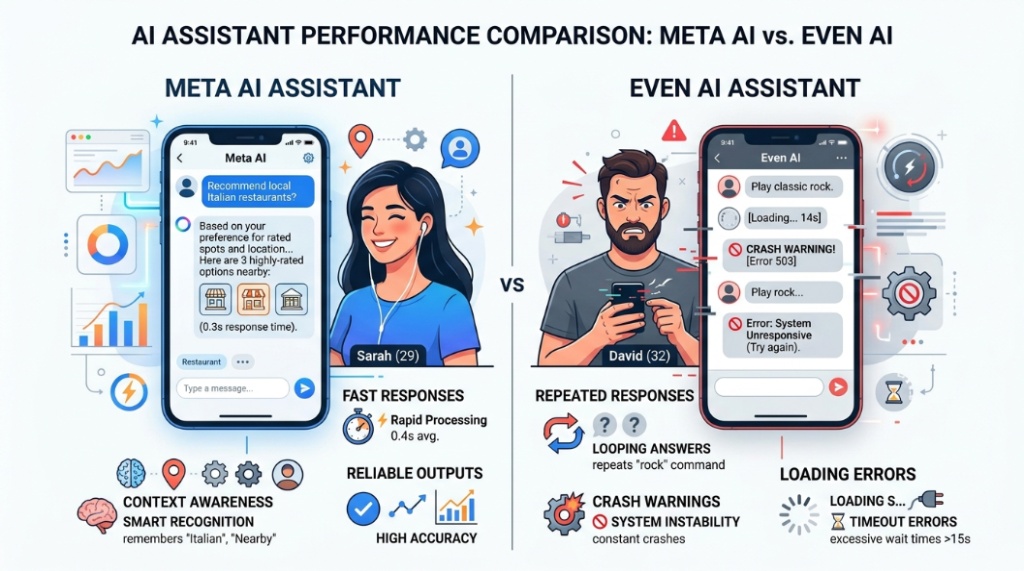
Users often praise:
- Fast response speed
- Context retention
- Natural voice interaction
- Reliable assistant behavior
- Smooth follow-up conversations
The AI experience feels closer to a real assistant rather than a scripted chatbot.
Even AI Problems
The Even Realities G1 AI experience has received more criticism from long-term users.
Common complaints include:
- App crashes
- Frozen prompts
- Repetitive responses
- Context confusion
- Poor handling of complex prompts
The “I Am Even AI” Frustration
One unusual complaint is that the AI repeatedly introduces itself during conversations.
Users report hearing phrases like:
“I am Even AI, developed by Even Realities…”
While harmless initially, the repetition quickly becomes irritating and breaks conversational immersion.
The Endless Rephrase Loop
Another frequently reported issue involves repetitive AI failure loops.
Instead of adapting to prompts intelligently, the system often repeats:
“I could not understand that. Could you please rephrase that for me?”
Repeated failures create a frustrating user experience that feels unfinished for a premium-priced device.
Missing Features That Make No Sense
No Built-In Speakers
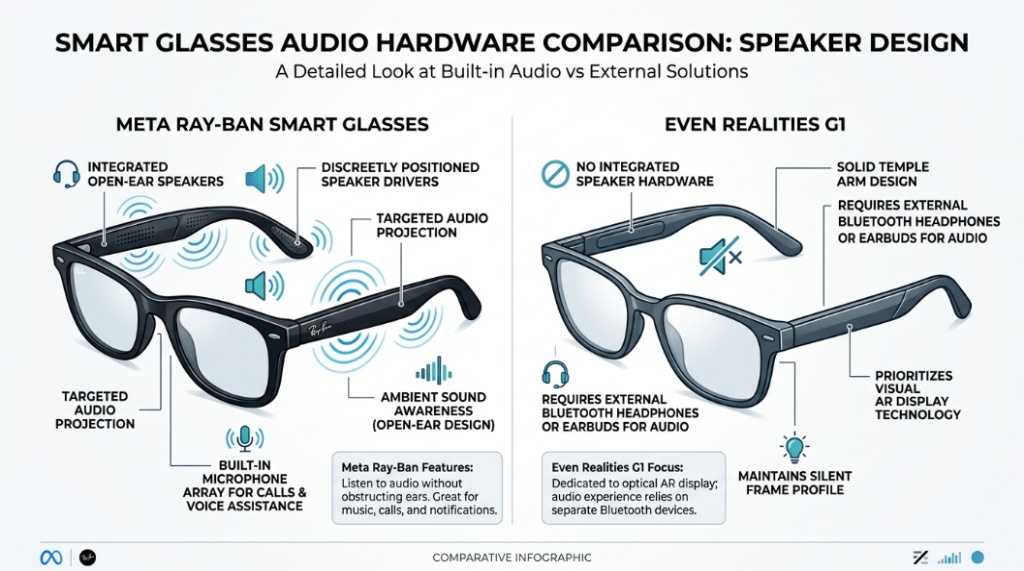
The Even Realities G1 completely omits built-in speakers.
This creates several limitations:
- No open-ear audio
- No seamless music playback
- No podcast listening
- No natural AI voice feedback
- No integrated call experience
If users want audio, they must wear separate earbuds.
This significantly reduces convenience.
Meanwhile, the Meta Ray-Bans function almost like premium open-ear headphones with integrated AI functionality.
Meta’s approach focuses on practical everyday usability, combining open-ear audio, hands-free messaging, voice commands, and AI features into a package that feels more like premium eyewear than experimental hardware. According to the official Ray-Ban Meta feature overview, the glasses include integrated speakers, microphones, camera functionality, and Meta AI assistance.
Voice Message Limitations
Another surprising omission is the lack of smooth voice-to-text messaging support on the G1.
Despite being AI-focused smart glasses, users cannot seamlessly reply to messages using voice commands in the same way many smartwatches already support.
For a device marketed as futuristic wearable technology, this feels like a major oversight.
Meta Ray-Ban vs Even Realities G1 Comparison Table
| Feature | Meta Ray-Ban Gen 2 | Even Realities G1 |
|---|---|---|
| Core Focus | Audio + AI assistant | HUD display + AI |
| Display | No HUD | Waveguide HUD display |
| Audio | Built-in open-ear speakers | No speakers |
| Comfort | Comfortable for long wear | Mixed comfort reports |
| AI Quality | Natural and conversational | Robotic and repetitive |
| Voice Messaging | Supported | Limited support |
| Software Stability | Polished ecosystem | Beta-like experience |
| App Ecosystem | Mature Meta integration | Limited app support |
| Best For | Every day smart wearable use | Teleprompter and translation |
| Overall Value | Better for most users | Niche early-adopter device |
Who Should Buy the Meta Ray-Bans?
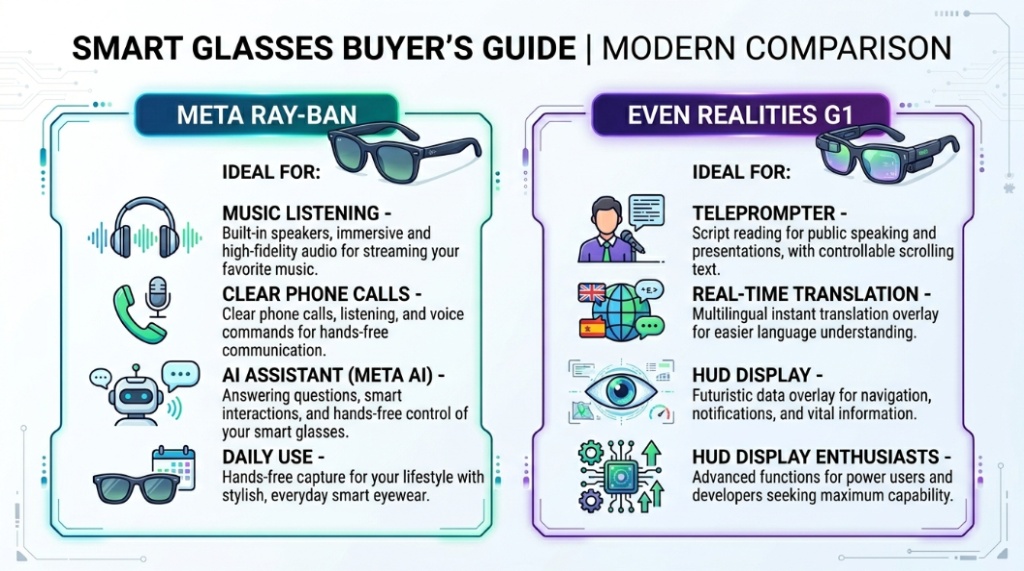
The Meta Ray-Bans are ideal for users who want:
- Reliable smart glasses
- Great audio quality
- Hands-free phone interaction
- Stable AI assistance
- Comfortable long-term wear
- Everyday usability
They currently offer one of the most balanced smart wearable experiences available.
Who Should Buy the Even Realities G1?
The Even Realities G1 may still appeal to users who specifically want:
- HUD-based notifications
- Real-time translation overlays
- Teleprompter functionality
- Experimental wearable technology
However, buyers should also expect:
- Software instability
- Display limitations
- Missing audio features
- Comfort challenges
- Occasional crashes
Are $700 Smart Glasses Worth It?
Whether $700 smart glasses are worth it depends entirely on expectations.
If users prioritize:
- Practical daily convenience
- Reliable AI features
- Audio integration
- Stable software
The Meta Ray-Bans currently provide significantly better value.
If users primarily want futuristic HUD experimentation and can tolerate unfinished software, the Even Realities G1 may still feel exciting.
But many buyers expecting a polished next-generation wearable experience may end up disappointed.
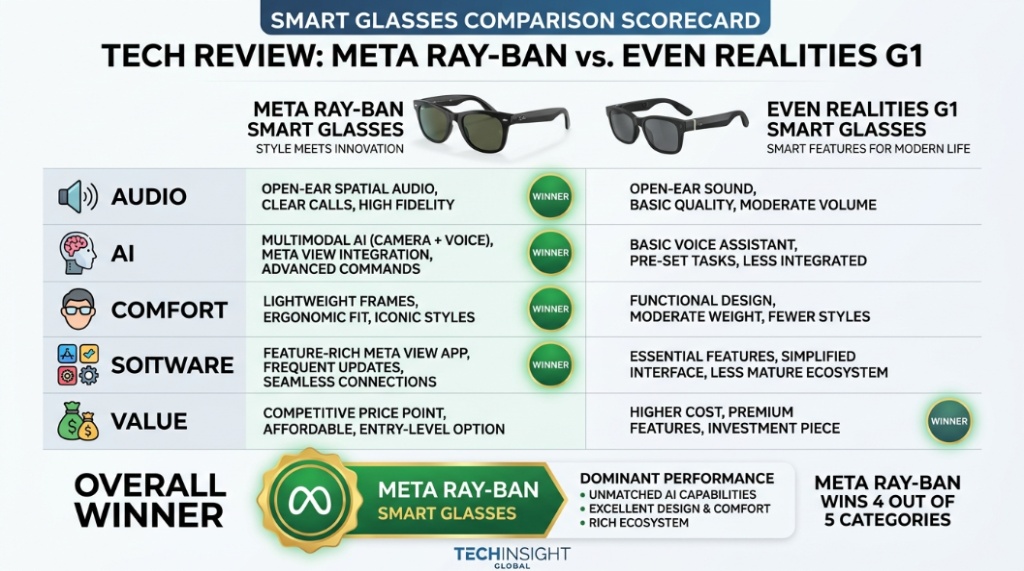
Final Verdict: Meta Ray-Bans Win for Most Users
The Even Realities G1 introduces genuinely exciting ideas.
At times, it feels like the future of augmented reality wearables.
However, smart glasses are only useful if they work consistently in daily life.
Right now, the Meta Ray-Ban Gen 2 delivers a far more complete experience through:
- Reliable AI assistance
- Excellent audio quality
- Stable software
- Comfortable wearability
- Strong ecosystem integration
The Even Realities G1 still feels closer to an ambitious early-stage prototype than a polished premium consumer product.
For most buyers spending $700–$800, reliability matters more than futuristic marketing concepts.
And currently, Meta understands that far better.
