


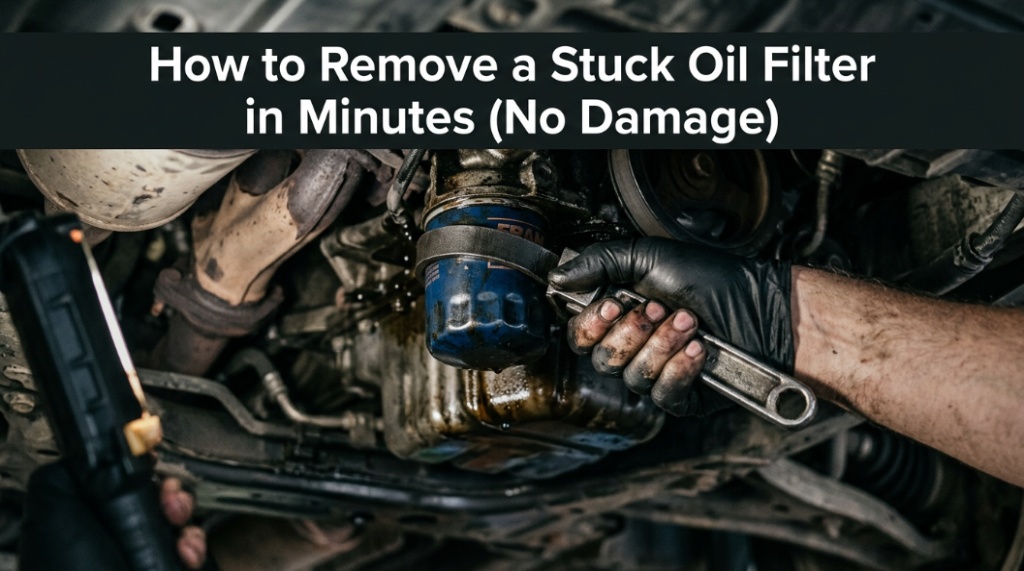
05 May How to Remove a Stuck Oil Filter in Minutes (No Damage)
The fastest way to remove a stuck oil filter is to use a proper oil filter wrench (cap, strap, or claw type) and apply steady counterclockwise force—combined with penetrating oil if needed.
A stuck oil filter can turn a simple oil change into a frustrating, time-wasting job. You expect a quick 20-minute maintenance task—but instead, you’re dealing with a filter that refuses to budge, tools slipping, and the risk of damaging your engine housing. This is one of the most common DIY car maintenance problems.
Here’s the reality: most stuck oil filters happen because of over-tightening, heat expansion, or poor installation techniques. The good news? You don’t need professional tools or mechanical expertise to fix it.
Stuck oil filter removal is the process of safely loosening and removing an oil filter that won’t turn by hand, using the right technique and tools without damaging engine components.
This guide shows easy oil filter removal methods that work in minutes—even if your filter feels welded in place. You’ll learn step-by-step solutions, tools that actually work, and how to prevent the issue entirely.
Why does an oil filter get stuck in the first place?
Oil filters get stuck due to over-tightening, heat cycles, gasket bonding, or lack of lubrication during installation.
Understanding the cause helps you choose the right removal method instead of forcing it and causing damage.
Common reasons your oil filter won’t come off
- Over-tightening: The number one cause. Many people use tools instead of hand-tightening during installation.
- Heat expansion: Engines heat up to 90–110°C, causing metal parts to expand and tighten further.
- Dry gasket: If the rubber gasket wasn’t oiled, it can bond tightly to the engine.
- Double gasket issue: Old gasket stuck to engine + new filter installed = extreme pressure.
- Time and corrosion: Filters left on too long can seize due to grime and oxidation.
According to automotive service data, over 60% of stuck filter cases are caused by incorrect installation torque.
How to remove a stuck oil filter without tools?
You can remove a stuck oil filter without tools by using grip strength, a rubber cloth, or tapping it gently to break the seal.
Step-by-step method
- Let the engine cool completely
- Wrap a rubber glove or cloth around the filter for better grip
- Turn counterclockwise slowly and steadily
- Tap lightly around the filter base to loosen the seal
This works best if the filter is only moderately stuck. If it doesn’t move after 2–3 attempts, move to tool-based methods.
What are the best tools for stuck oil filter removal?
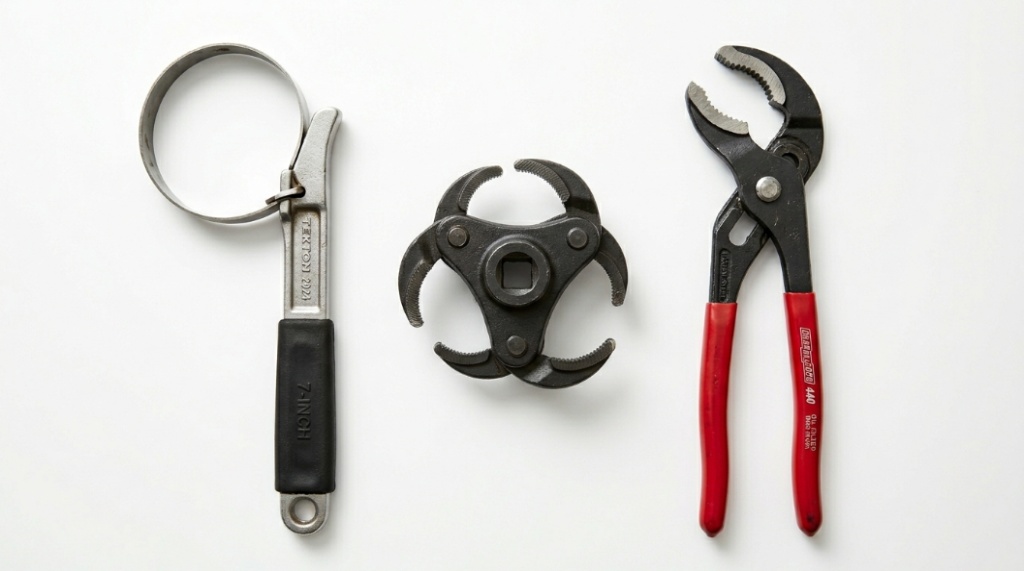
The best tools for removing a stuck oil filter are cap wrenches, strap wrenches, claw tools, and chain wrenches.
Comparison of oil filter removal tools
| Tool Type | Best For | Pros | Cons |
|---|---|---|---|
| Cap Wrench | Specific filter sizes | Precise fit, low damage risk | Needs exact size |
| Strap Wrench | General use | Adjustable, easy to use | Can slip if oily |
| Claw Tool | Tight spaces | Strong grip, self-tightening | Can crush filter |
| Chain Wrench | Severely stuck filters | Maximum grip power | High damage risk |
For most situations, a strap or claw wrench offers the best balance between power and safety.
How do you remove a severely stuck oil filter?
To remove a severely stuck oil filter, use a claw or chain wrench and apply controlled force while ensuring you don’t damage the mounting surface.
Advanced removal steps
- Spray penetrating oil around the base and wait 10–15 minutes
- Use a claw wrench for stronger grip
- Apply slow, consistent pressure—not sudden force
- Reposition tool if slipping occurs
If the filter deforms slightly, that’s normal. But avoid crushing it completely unless you’re using last-resort methods.
Can you use a screwdriver to remove a stuck oil filter?
Yes, but only as a last resort—you can pierce the filter with a screwdriver and use it as leverage.
Important warning
This method can damage the filter housing and create oil spills, so use it only when other methods fail.
Steps
- Insert a strong screwdriver through the filter body
- Use it as a lever to twist counterclockwise
- Apply slow pressure to avoid tearing metal
This technique works because it increases torque, but it destroys the filter completely.
How to remove a stuck oil filter without damaging the engine?
To avoid damage, always apply force evenly, use the correct tool, and avoid excessive pressure near the mounting surface.
Key safety tips
- Never use heat near engine components
- Avoid hitting the engine block directly
- Keep tools aligned with the filter
- Stop if the mounting stud starts moving
Engine damage often happens when force is misdirected—not because the filter is too tight.
People Also Ask: Why is my oil filter stuck even after using a wrench?
If your oil filter is still stuck after using a wrench, it’s likely over-tightened, heat-seized, or bonded due to a dry gasket.
In this case, switching tools or adding penetrating oil usually solves the problem.
People Also Ask: Should you run the engine before removing a stuck filter?
Running the engine briefly can warm the oil and slightly loosen the filter, but it should never be hot when removing.
Warm—not hot—is the key balance for easier removal.
How can you prevent an oil filter from getting stuck again?
You can prevent a stuck oil filter by properly lubricating the gasket and tightening it only by hand.
Best practices
- Apply fresh oil to the rubber gasket
- Hand-tighten only (¾ turn after contact)
- Clean mounting surface before installation
- Check for old gasket residue
This simple habit eliminates 90% of stuck filter problems.
Conclusion
Removing a stuck oil filter doesn’t have to be a nightmare. With the right approach—starting from simple grip techniques to using specialized tools—you can handle even the toughest cases in minutes.
The key takeaway is this: most stuck filters are caused by installation mistakes, not mechanical defects. Fix the root cause, and you won’t face the problem again.
If you’re doing your own oil changes regularly, investing in a reliable oil filter wrench and following proper installation steps will save you time, effort, and frustration.
Next time your oil filter won’t budge, you’ll know exactly what to do—quickly, safely, and without damage.
FAQ Section
How tight should an oil filter be?
An oil filter should be hand-tightened about ¾ turn after the gasket contacts the surface—no tools needed.
Can a stuck oil filter damage the engine?
No, but improper removal techniques can damage the mounting threads or housing.
What happens if you leave an oil filter on too long?
It can become stuck due to heat cycles and buildup, making removal harder and less efficient.
Is it safe to reuse an oil filter?
No, oil filters are designed for single use and should always be replaced during an oil change.
Do all oil filters use the same removal method?
Yes, but accessibility and size may require different tools.
Why does oil leak after replacing a filter?
This often happens due to a double gasket or improper sealing.
What is the easiest oil filter removal method?
Using a strap wrench with steady pressure is the easiest and safest method for most cases.
📌 Related Reads